
The Experience Economy in Irish Hospitality: Why Bars & Restaurants Must Offer More Than Just Food in 2026
The Irish hospitality sector in 2026 is no longer just about serving food and drinks. Customers are not simply going out to eat — they are going out to experience something.
Welcome to the Experience Economy.
From bustling pubs in County Clare to boutique restaurants across Ireland, success is no longer defined by menu alone. Instead, customers are asking:
- What makes this place different?
- What will I remember after I leave?
- Would I come back — or recommend it?
At the same time, thousands of EU candidates are searching for:
- restaurant jobs Ireland
- chef jobs Ireland with accommodation
- work in Ireland hospitality sector
This creates a unique opportunity: Businesses that combine experience + strong teams will dominate the market.
What Is the Experience Economy in Hospitality?
The Experience Economy refers to a shift in customer behaviour. People are no longer satisfied with:
- Standard service
- Basic menus
- Generic dining environments
Instead, they want:
- Atmosphere
- Interaction
- Authenticity
- Personal connection
In simple terms: Customers remember how you made them feel — not just what you served.
Why Traditional Hospitality Models Are Struggling
Many businesses are still operating with outdated models. Common issues include:
- Focus only on food quality
- Lack of atmosphere
- Minimal staff engagement
- No unique identity
This leads to:
- Lower customer retention
- Increased competition on price
- Poor online reviews
In 2026, this approach is no longer sustainable.
What Modern Customers Expect in Ireland
Irish hospitality customers — both local and international — now expect:
1. A Memorable Atmosphere
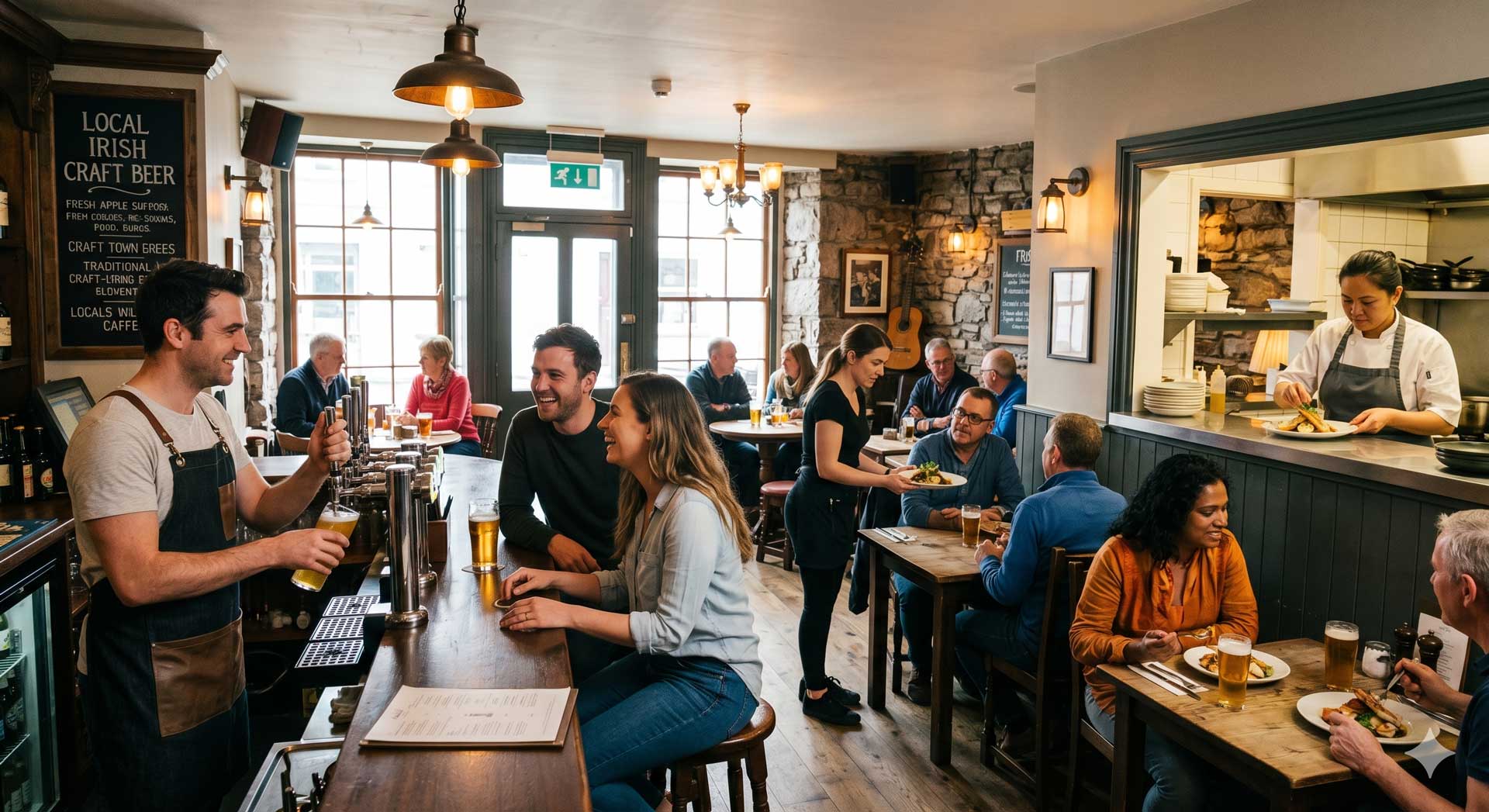
- Warm, welcoming environments
- Strong identity (pub, gastro, fine dining)
- Music, lighting, and energy
2. Interaction with Staff
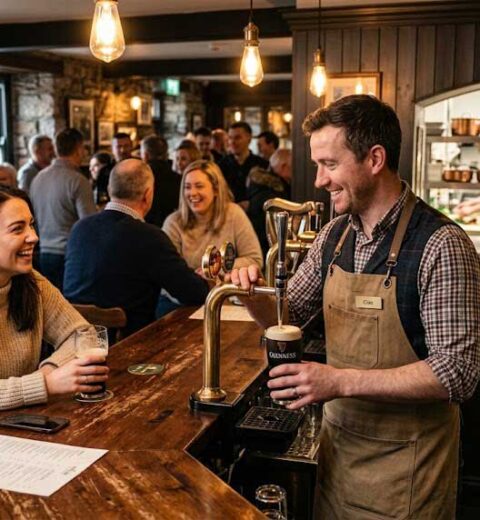
Customers want friendly communication, knowledge about food and drinks, and personal recommendations. This is where great staff make the difference.
3. Storytelling & Authenticity
Guests are increasingly interested in local produce, Irish food culture, and the story behind dishes.
4. Consistency
No matter how busy the venue is, food must be consistent and service must be reliable. This requires skilled and experienced teams.
Why Staffing Is at the Core of the Experience Economy
You cannot deliver a great experience without the right people. This is where many businesses fail. They invest in interiors, marketing, and menu design, but neglect hiring and retaining quality staff.
Key Roles That Drive Experience:
Chefs (Back of House):
- Deliver consistency
- Maintain quality under pressure
- Execute menu vision
Front of House Staff:
- Create atmosphere
- Engage with customers
- Upsell and enhance experience
Without strong teams, even the best concept will fail.
What This Means for Hiring in Ireland
The shift to experience-led hospitality is changing recruitment. Employers are no longer just hiring for technical ability. They are now hiring for: Personality, Communication, Attitude, and Energy.
What Employers Should Look For
When hiring for chef jobs Ireland and restaurant jobs Ireland, focus on candidates who:
- Understand service flow
- Can work under pressure
- Take pride in presentation
- Want to grow long-term
What EU Candidates Bring to Irish Hospitality
EU candidates are a key part of Ireland’s hospitality workforce. They bring: International experience, Strong work ethic, Adaptability, and Knowledge of different cuisines.
For candidates searching:
- EU jobs Ireland hospitality
- relocate to Ireland work
Ireland offers career opportunities, competitive salaries, and exposure to international markets.
The Link Between Experience and Retention
Here’s something many businesses overlook: A strong experience culture improves staff retention. Why?
Because staff feel part of something meaningful, work becomes more engaging, and teams are more motivated. This reduces turnover, recruitment costs, and operational stress.
The Role of Accommodation in Experience-Driven Hiring
Even the best job offer will fail without accommodation. Candidates searching “jobs in Ireland with accommodation” are prioritising: Stability, Security, and the Ability to relocate.
Employers who offer accommodation attract better candidates, fill roles faster, and retain staff longer. This directly supports the experience economy.
Example: Two Hospitality Models Compared
Traditional Model
- Focus on food only
- Minimal staff engagement
- High turnover
- Average reviews
Experience-Led Model
- Strong atmosphere
- Engaged staff
- Consistent service
- High customer retention
The difference is people.
How Businesses Can Adapt in 2026
To succeed in today’s market, hospitality businesses must evolve.
1. Build a Strong Team Culture
Create an environment where staff feel valued, communication is strong, and training is ongoing.
2. Hire for Personality and Skill
Don’t just ask: “Can they cook?”. Ask: “Can they perform under pressure and be part of a team?”.
3. Invest in Training
Ongoing development ensures consistency, confidence, and better service.
4. Offer Clear Career Paths
Staff are more likely to stay if they see growth opportunities and long-term potential.
5. Provide Accommodation Where Possible
This removes one of the biggest barriers to hiring.
Why Experience Drives Revenue
Experience-led hospitality results in higher customer spend, repeat business, positive reviews, and word-of-mouth marketing. This directly impacts profitability.
How EU WorkForce Supports Experience-Driven Hiring
At EU WorkForce, we understand that hospitality is about people. We support Irish employers by:
- Sourcing experienced EU candidates
- Pre-screening for skill and attitude
- Matching candidates to the right roles
- Focusing on long-term placements
Our candidates are prepared for: High-volume service, Team environments, and Relocation to Ireland.
For Candidates: How to Stand Out
If you are searching for hospitality jobs Ireland, chef de partie jobs Ireland, or bar jobs Ireland, focus on:
- Real experience
- Communication skills
- Flexibility
- Willingness to learn
Employers are looking for more than just technical ability.