
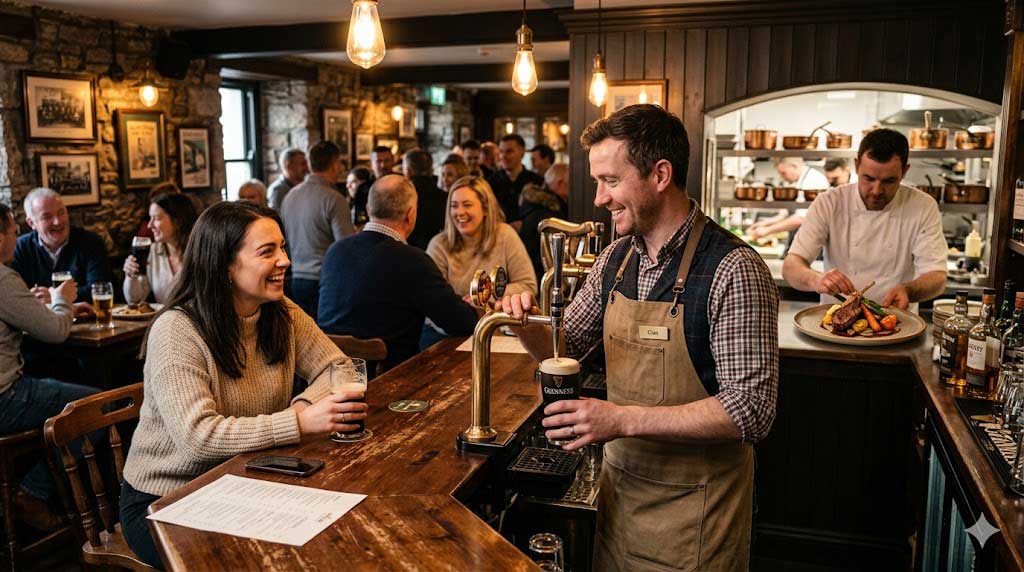
Introduction: A Sector in Transition
The Irish hospitality industry is entering a new phase in 2026. While demand for travel, dining, and tourism remains strong, the way hospitality businesses operate is changing rapidly. From staffing shortages to rising costs and evolving customer expectations, operators are facing a more complex and competitive environment than ever before.
At the same time, thousands of EU candidates are actively searching online for:
- hospitality jobs Ireland
- chef jobs Ireland with accommodation
- restaurant jobs Ireland immediate start
This creates a unique dynamic: Demand exists on both sides — but success depends on adaptation.
The Current State of Irish Hospitality in 2026
The industry is defined by three key realities:
1. High Demand for Hospitality Services
Tourism remains strong, with both domestic and international visitors contributing to:
- Increased restaurant traffic
- Higher hotel occupancy rates
- Growth in regional tourism
2. Ongoing Staffing Challenges
Despite demand, businesses are struggling to hire chefs, recruit front-of-house staff, and maintain stable teams. Search trends show strong interest in:
- “EU hospitality jobs Ireland”
- “work in Ireland hospitality sector”
3. Rising Operational Costs
Operators are dealing with increased wages, energy costs, and supplier price increases. This creates pressure on profitability.
Trend 1: Staffing Shortages Will Continue
Staffing remains the number one challenge in Irish hospitality. Even in 2026, businesses are still asking: “Where can we find reliable staff?”
Why the Shortage Continues
- Reduced EU migration compared to previous years
- Increased competition from other EU countries
- Housing limitations in Ireland
What This Means for Employers
Businesses must become more attractive to candidates, improve recruitment processes, and offer additional benefits (especially accommodation).
What This Means for Candidates
For those searching chef jobs Ireland or restaurant jobs Ireland, there are strong opportunities — especially in regional areas.
Trend 2: Accommodation Is Now a Competitive Advantage
The housing crisis has fundamentally changed recruitment. Candidates are actively searching: “jobs in Ireland with accommodation”.
Why Accommodation Matters
Without accommodation:
- Candidates cannot relocate
- Offers are declined
- Hiring delays increase
With accommodation:
- Roles are filled faster
- Staff stay longer
- Businesses operate more efficiently
The New Reality: Accommodation is no longer a benefit — it is a requirement.
Trend 3: The Rise of Experience-Led Hospitality
Customers in 2026 are not just paying for food — they are paying for experiences. This includes atmosphere, interaction, and unique dining concepts.
What This Means for Hiring
Businesses must hire skilled chefs, engaging FOH staff, and team players. Staff are now part of the customer experience.
Trend 4: Cost Control Through Smarter Staffing
With rising costs, businesses must operate more efficiently.
The Problem
Many operators still rely on:
- Reactive hiring
- Short-term solutions
- High turnover
The Solution
Strategic staffing includes:
- Hiring for long-term stability
- Pre-screening candidates
- Reducing turnover
Financial Impact
Proper staffing reduces recruitment costs, training costs, and operational disruptions.
Trend 5: EU Recruitment Remains Essential
EU workers continue to play a key role in Irish hospitality. Candidates searching EU jobs Ireland hospitality and relocate to Ireland work are actively looking for opportunities.
Why EU Candidates Are Important
They provide experience, flexibility, and immediate availability. The Challenge: Ireland must compete with other EU countries to attract them.
Trend 6: Speed of Hiring Will Define Success
In 2026: The fastest employer wins the candidate.
Common Mistakes:
- Delayed interviews
- Slow decision-making
- Unclear job offers
Best Practice:
- Schedule interviews quickly
- Provide clear offers
- Communicate efficiently
Trend 7: Employer Branding Matters More Than Ever
Candidates are now choosing employers — not just jobs. They look for stability, professionalism, and reputation.
How to Improve Employer Branding
- Clear job descriptions
- Transparent salary and conditions
- Positive communication
The Shift in Candidate Expectations
Candidates are no longer asking: “Is there a job?” They are asking: “Is this the right opportunity for me?”
Top Priorities for Candidates
- Accommodation
- Fair salary
- Work-life balance
- Long-term stability
How Irish Hospitality Businesses Can Adapt
To stay competitive, businesses must evolve.
1. Offer Accommodation Where Possible
This is the biggest advantage in recruitment today.
2. Improve Recruitment Strategy
Move from reactive to proactive hiring.
3. Focus on Retention
Keeping staff is more important than hiring.
4. Work With Specialist Recruiters
Access to pre-qualified candidates reduces risk.
5. Build Strong Teams
Invest in culture, training, and communication.
Why Ireland Still Attracts Hospitality Workers
Despite challenges, Ireland remains attractive due to a strong job market, an English-speaking environment, and career opportunities.
For candidates searching hospitality careers Ireland, the country continues to offer real opportunities.
How EU WorkForce Supports the Industry
At EU WorkForce, we help Irish businesses adapt to these trends. Our services include:
- Direct EU candidate sourcing
- Pre-screened staff
- Fast recruitment processes
- Support with relocation expectations
We focus on: Long-term staffing solutions, not short-term fixes.
For Candidates: What This Means for You
If you are searching for chef jobs Ireland or hospitality jobs Ireland with accommodation, this is a strong time to apply.
How to Improve Your Chances
- Prepare a detailed CV
- Highlight real experience
- Be ready for interviews
- Consider roles outside major cities