
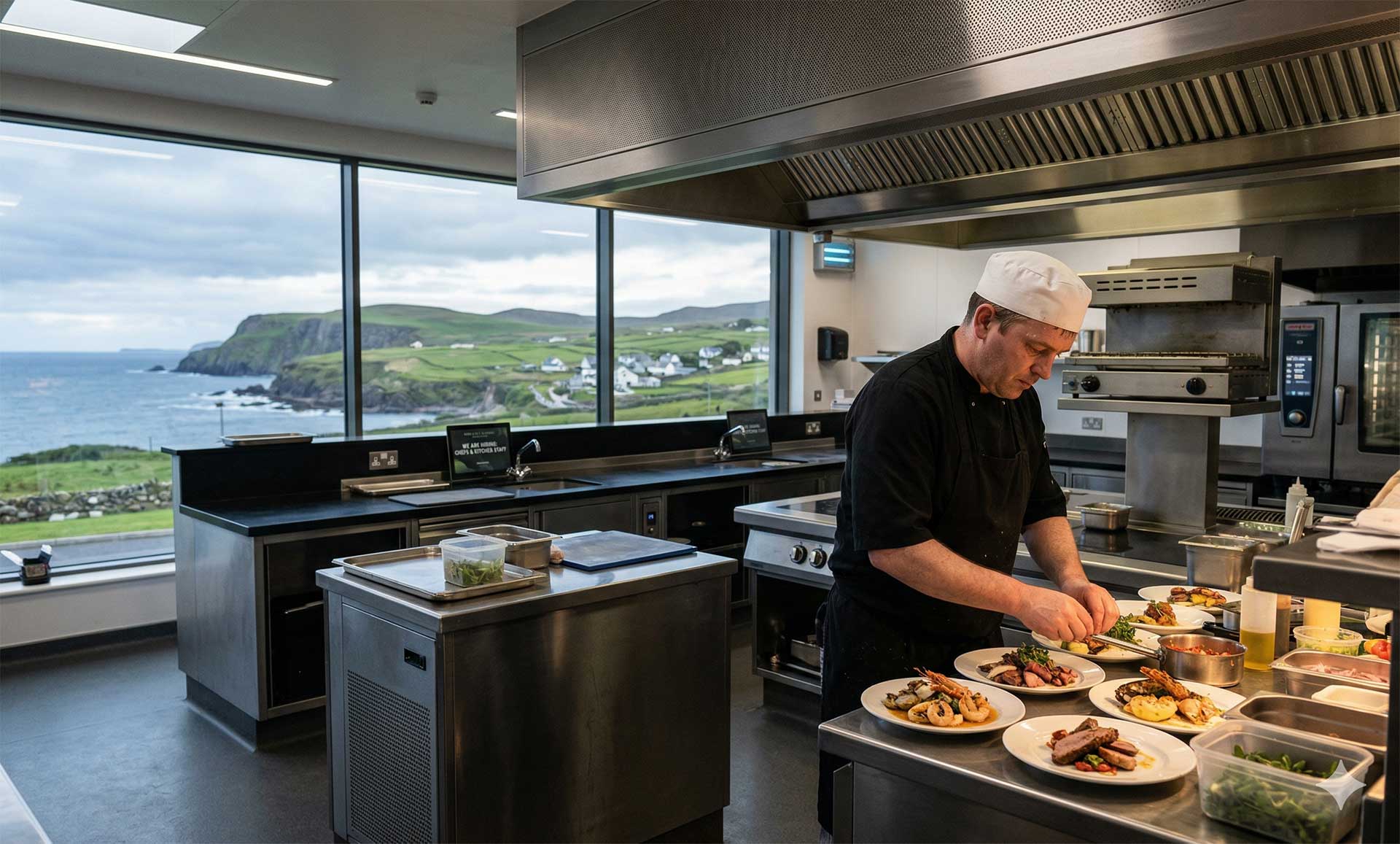
Introduction: A Crisis That Can No Longer Be Ignored
The Irish hospitality sector is at a turning point in 2026. While tourism demand remains strong and customer expectations continue to rise, one challenge is dominating the industry: A severe and ongoing staffing crisis.
From small gastro pubs along the Wild Atlantic Way to large hotels in regional towns, employers across Ireland are struggling to recruit and retain skilled staff. At the same time, thousands of EU candidates are actively searching online for:
- hospitality jobs in Ireland
- chef jobs Ireland with accommodation
- work in Ireland hospitality sector
Yet, despite this demand on both sides, there is still a disconnect. So what is really happening?
Why the Staffing Crisis Is Getting Worse in 2026
1. The EU Talent Pipeline Has Changed
For years, Ireland relied heavily on EU workers to fill key roles such as:
- Chef de Partie
- Commis Chefs
- Kitchen Porters
- Waiters and Bar Staff
However, this pipeline has shifted. EU candidates now have more options than ever in countries like Germany, Netherlands, and Scandinavia. These countries offer competitive salaries, better housing availability, and lower relocation risk. This means Ireland must now compete harder to attract EU staff.
2. Housing Crisis = Recruitment Crisis
One of the most searched terms today is: “jobs in Ireland with accommodation”.
Because without accommodation, relocation is almost impossible. In cities like Dublin, Cork, and Galway, rent prices are extremely high and availability is limited. Candidates are willing to work — but they cannot find a place to live.
3. Rising Salary Expectations in Hospitality Jobs Ireland
Due to staff shortages, wages have increased significantly. Typical expectations now:
- Chef de Partie: €16–€18 per hour
- Commis Chef: €14–€15 per hour
- FOH Staff: €13.50–€15 per hour
Salary alone is no longer enough to attract staff. Candidates are now prioritising accommodation, work-life balance, stability, and long-term opportunities.
4. High Staff Turnover Is Killing Businesses
One of the biggest hidden problems in Irish hospitality is turnover. Many businesses experience staff leaving within weeks due to no accommodation, unrealistic expectations, or burnout in busy kitchens.
The Real Cost of the Staffing Crisis
Most employers focus on wages — but the real cost goes far beyond that. Hidden costs include:
- Lost revenue due to understaffing
- Poor customer experience and negative reviews
- Increased pressure on existing staff
- Lower team morale
In reality, being understaffed is often more expensive than hiring properly.
What EU Candidates Are Actually Searching For
If you want to attract talent, you must understand how candidates search:
- chef jobs Ireland with accommodation
- hospitality jobs Ireland for EU citizens
- restaurant jobs Ireland immediate start
- relocate to Ireland work hospitality
Candidates are not just looking for jobs — they are looking for solutions to relocation.
The Solution: A New Approach to Hospitality Recruitment in Ireland
The businesses that are succeeding in 2026 are not using outdated hiring methods. They are adapting.
1. Accommodation-Led Hiring Strategy
This is the single biggest game changer. Employers offering staff housing or affordable rent are filling roles faster, attracting better candidates, and reducing staff turnover.
2. Targeted EU Recruitment Campaigns
Posting a job online is no longer enough. Successful employers are running targeted campaigns across EU countries.
3. Pre-Screening Candidates Properly
Proper screening reduces hiring risk and early resignations.
4. Speed = Competitive Advantage
In today’s market, the fastest employer wins the candidate.
EU vs Non-EU Hiring: What Works Best?
| Factor | EU Candidates | Non-EU Candidates |
|---|---|---|
| Speed | Fast | Slow (permit required) |
| Cost | Lower | Higher |
| Availability | Moderate | Large |
| Risk | Lower | Medium |